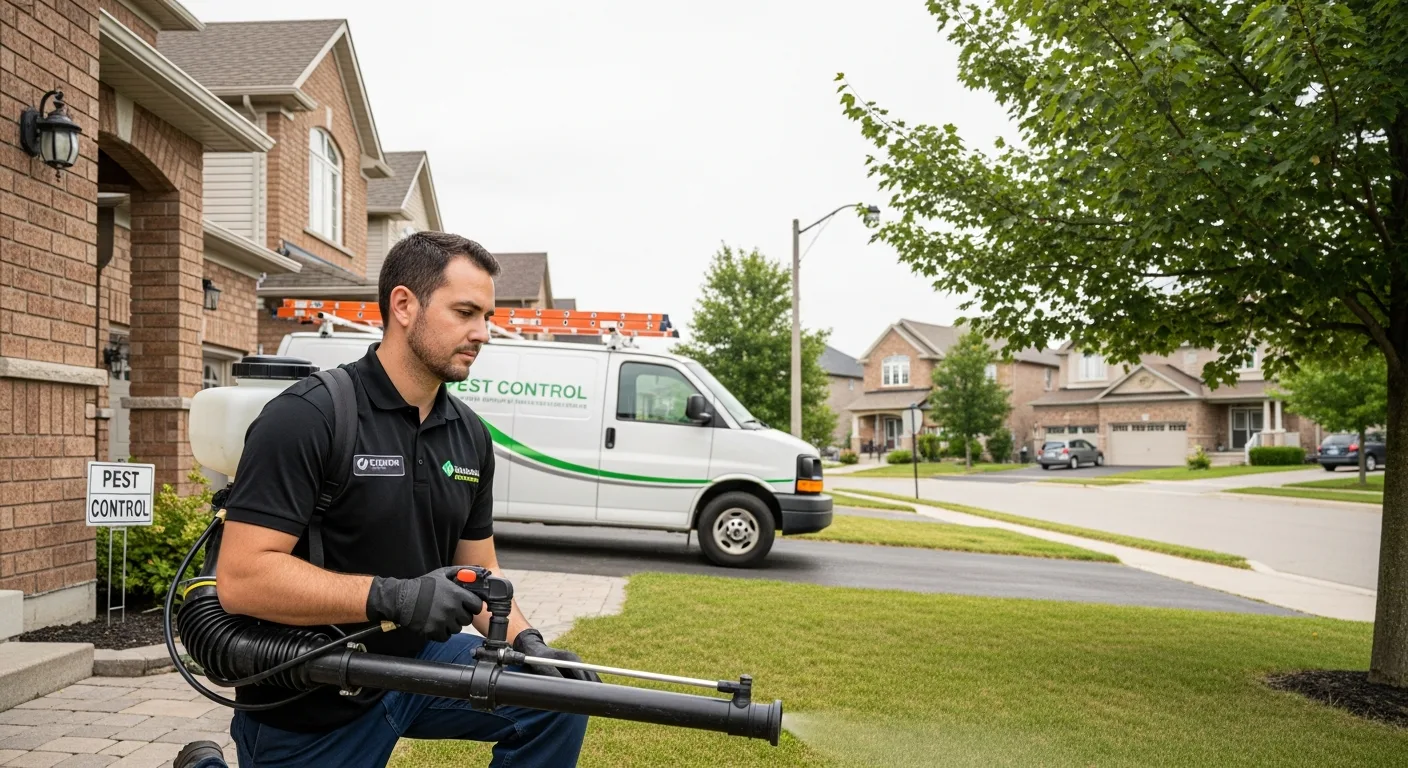
In Maple, the First Sign of a Pest Problem Is Rarely the Beginning
A scratching sound in the attic. Carpenter ants appearing near a window. A wasp nest tucked beneath the eaves. For many Maple homeowners, these are the first visible signs of a problem that has often been developing quietly for weeks or even months.
At Apex Pest Control, we've learned that effective pest management starts with understanding why pests chose a property in the first place. Every inspection is approached like an investigation. We look for entry points, nesting areas, moisture issues, structural vulnerabilities, and other conditions that may be attracting unwanted activity.
The clues are often subtle—a small gap near a utility line, damaged wood, nesting materials, grease marks, or signs of wildlife movement around the roofline. Identifying these underlying causes allows us to create targeted solutions that address the source of the problem, not just the symptoms.
From rodents and carpenter ants to wasps, raccoons, squirrels, and other nuisance pests, Maple property owners trust Apex Pest Control for honest recommendations, experienced service, and practical long-term protection. Our goal is simple: help you regain confidence that your home or business is protected, comfortable, and pest-free.

Common Pest Problems in Maple
Mice and Rodents
Mice are the most frequently reported pest problem in Maple homes each fall. As temperatures drop and field vegetation dies back around Highway 400 and the agricultural land to the west, mice shift from outdoor habitat to the warmth of residential structures. A home without effective exclusion in place will experience entry annually. Our mice control service covers full inspection, interior trapping, tamper-resistant exterior bait stations, and complete structural exclusion at every identified entry point.
Carpenter Ants
Carpenter ants are a persistent structural concern in Maple's established residential areas with mature trees. Unlike termites, they excavate wood for nesting galleries rather than consuming it — their damage is silent and often unnoticed until the colony is well established. Properties with any history of moisture intrusion in exterior wood, window frames, or subflooring are at elevated risk. Our carpenter ant control service locates and eliminates the full colony using non-repellent barriers and injection baiting.
Wasp Nest Removal
Yellow jackets and paper wasps build nests in Maple homes from late May through early September. Nests in eaves, wall voids, deck structures, and underground in lawn areas reach peak population and peak aggression in August and September. Our wasp nest removal service handles all nest types — including underground yellow jacket nests — safely and completely, with same-day service available.
Wildlife Removal
Raccoons and squirrels access Maple homes through aging soffits, deteriorated roof vents, and gaps along the roofline. Skunks den under decks and in crawl spaces. Properties near the conservation areas and open land to the west and north experience the highest wildlife pressure. Our wildlife removal team provides humane one-way removal and permanent steel mesh exclusion. See dedicated pages for raccoon removal and squirrel removal.
Areas We Serve in Maple
We provide pest control and wildlife removal throughout all Maple communities, from the established GO corridor neighbourhoods to the newer subdivisions expanding toward the agricultural edge.
- Maple GO Station corridor
- Maple Creek Estates
- Vellore Village (north Maple)
- Patterson (south Maple)
- Keele Street / Major Mackenzie corridor
- Rutherford Road communities
- Highway 400 western communities
- Jane Street corridor
Seasonal Pest Control in Maple
Spring (March–May)
Raccoons begin searching for denning sites in Maple attics from late March. Carpenter ants re-activate in May, with foraging visible along foundations and exterior walls. Squirrels attempt spring roofline entry. Wasp queens establish new colonies in late May under soffits and in wall voids of older homes.
Summer (June–August)
Wasp nests grow rapidly through summer, reaching dangerous sizes by August. Carpenter ant and pavement ant activity peaks throughout Maple's residential areas. Commercial properties along Rutherford Road and Major Mackenzie Drive face increased pressure from fruit flies and cockroaches.
Fall (September–November)
Fall is the most critical season for Maple homeowners. Mouse infiltration from the agricultural and conservation land to the west begins in mid-September — earlier than in more urbanized communities. Every property without exclusion work is at high risk from October onwards. Raccoon movement increases significantly ahead of winter.
Winter (December–February)
Mice established inside Maple homes in fall remain active through winter. Wildlife that entered attics during fall denning continues to cause damage through the cold months. This is an effective treatment window — interior bait stations are productive and exclusion work can be confirmed with active mouse activity still visible.
Residential and Commercial Pest Control in Maple
We service all residential property types across Maple — detached homes, townhouses, and condominiums — as well as commercial properties along Rutherford Road, Major Mackenzie Drive, and the Highway 7 corridor. Our commercial pest management programs include scheduled visits, exterior bait station maintenance, and full service documentation for compliance requirements.
Why Choose Pest Control ON in Maple
Based in Vaughan
Our team is based in Vaughan — directly adjacent to Maple. Same-day service is available for most pest and wildlife calls.
Rural-Edge Expertise
We understand the early and intense fall mouse pressure that Maple's agricultural adjacency creates — and our exclusion programs reflect that.
Complete Entry Point Sealing
Every rodent and wildlife service includes permanent structural exclusion. We don't just treat — we prevent the problem from returning.
Satisfaction Guarantee
All services are backed by our guarantee. If pests return after treatment, we return and re-treat at no additional cost.